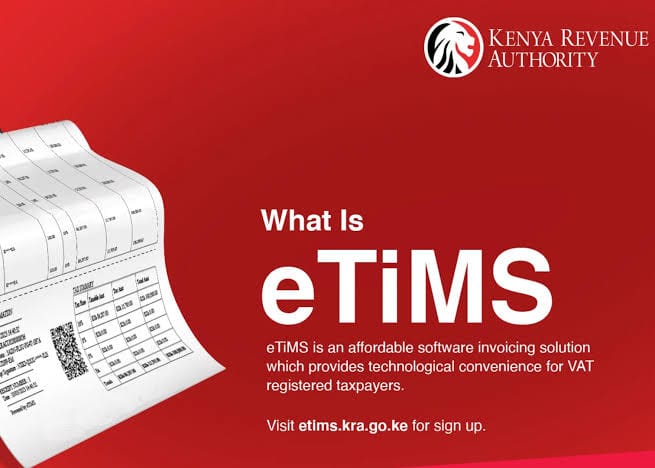
The Kenya Revenue Authority (KRA) has issued operational guidelines reiterating that businesses supplying goods and services to national and county government bodies must clear their electronic tax invoices through the eTIMS portal before receiving payment approval.
The move aims to curb tax loss arising from fictitious invoicing and unverified procurement claims within the public sector.
[ Supplier eTIMS Invoice ] ➔ [ Automated KRA Validation ] ➔ [ Ministry Clearance & Payment ]
Why KRA is Enforcing Strict Invoice Matching
Under previous manual procurement setups, suppliers could submit physical invoices that failed to reconcile with KRA's digital tax databases. This led to revenue leaks where Value Added Tax (VAT) was claimed without corresponding remittances.
Automated Verification: The eTIMS system assigns a unique cryptographic QR code and system control number to every verified transaction in real time.
State Accountability: Accounting officers in public offices are now personally liable if payments are issued against non-compliant invoices.
“The Kenya Revenue Authority has tightened tax compliance rules for suppliers doing business with state entities. Here is how eTIMS invoice matching works and how to avoid payment delays.”
Step-by-Step Compliance Checklist for Suppliers
eTIMS Registration: Ensure your business is onboarded onto the eTIMS platform via online portal or mobile application.
Real-Time Transmission: Generate invoices directly through eTIMS when delivering supplies to government receiving departments.
Reconciliation Check: Confirm that buyer details, PIN numbers, and itemized VAT breakdowns match the procurement order exactly before submitting payment claims.
Read more fiscal policy breakdowns in our Business section.
How we reported this
Compiled from statutory advisories issued by the Kenya Revenue Authority (KRA) and public procurement compliance directives.